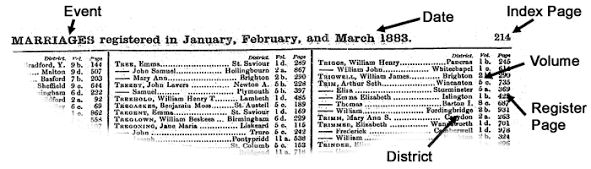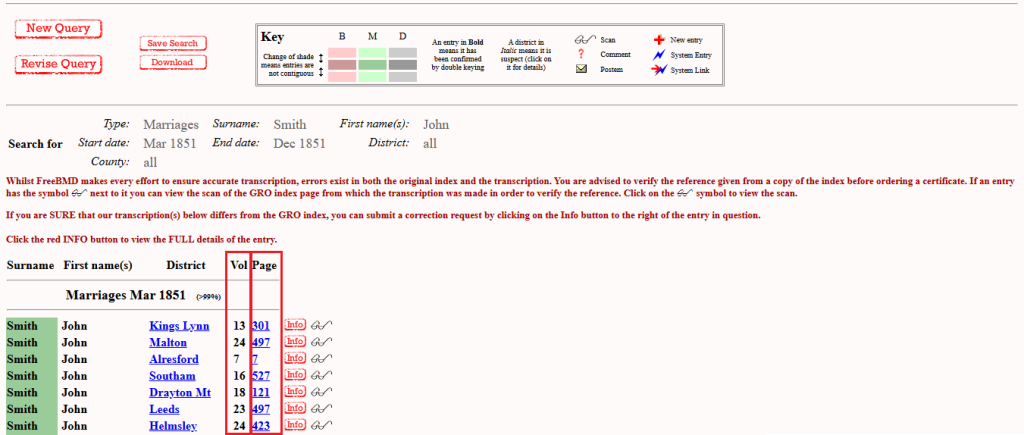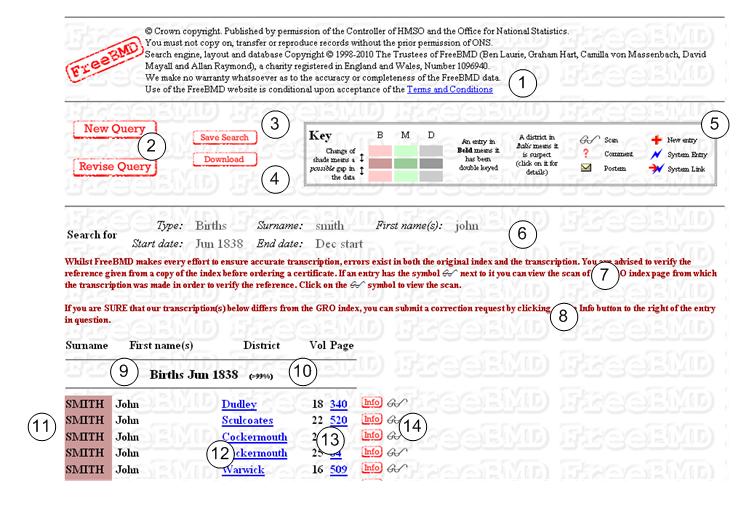
There’s few things more frustrating for a family historian than knowing exactly when and where an ancestor was born, married, or died, only to find that your ancestor is completely missing from FreeBMD search results. Because the government system of civil registration began in England and Wales on 1 July 1837, you might naturally assume that an event occurring after this date must be documented.
However, it’s vital to remember that searching popular databases like FreeBMD means you’re relying on a massive volunteer transcription project of the quarterly General Register Office (GRO) indexes. If a name doesn’t appear in your search results, it absolutely doesn’t mean the event went unregistered! More often than not, the record exists, but it’s hiding behind a quirk of the indexing system or a human error.
Table of Contents
Part 1: Why Names Go Missing from FreeBMD Indexes
Reason 1: The 42-Day Registration Grace Period
The GRO didn’t index vital events by the exact day they occurred; instead, they grouped registrations into four distinct quarters: March (covering January to March), June (April to June), September (July to September), and December (October to December). Crucially, parents were legally allowed a 42-day grace period to register a birth. Therefore, if your ancestor was born in late March, their official registration might easily have been pushed into the following June quarter index. Always expand your search to the quarter after the expected event!
Reason 2: Late Registrations and Supplemental Entries
If a birth or death was registered significantly late, or if a correction was made after the original index was printed, the event might not appear in the standard chronological sequence. The GRO handles these late additions by creating supplemental entries. If you’re cross-referencing on the official GRO site, you’ll often see these late entries marked with a specialised page suffix, such as “123/S”, where the “S” specifically indicates a supplemental entry.
Reason 3: Human Transcription Errors and Victorian Cursive
When relying on volunteer-transcribed indexes, you’re entirely at the mercy of difficult 19th-century cursive handwriting and the modern volunteers doing their best to decipher it. Transcription errors are incredibly common. In Victorian penmanship, capital letters like “I” and “J”, or “U” and “V”, were frequently styled in ways that make them completely indistinguishable today. If your ancestor seems to have vanished, try manually swapping these problematic letters or using wildcards in your search to bypass inevitable spelling errors.
Reason 4: Ongoing Transcription Gaps
Finally, you must remember the human element of the database itself. FreeBMD is an ongoing, volunteer-driven transcription effort. If the specific district or quarter you need hasn’t been fully transcribed by volunteers yet, your ancestor will seem completely missing from FreeBMD search results, requiring you to pivot to a different database or the official GRO site.
Part 2: Advanced Blindspots and Hidden Complications
Reason 5: The Pre-1911 Mother’s Maiden Name Blindspot
When searching for ancestors with very common surnames, you might try to narrow down the results using the mother’s maiden name—only to find zero matches. This happens because the Mother’s Maiden Name column wasn’t officially added to the printed GRO birth indexes until September 1911. Because FreeBMD is a direct transcription of those historical printed index books, any FreeBMD searches for births prior to September 1911 simply cannot filter by the mother’s maiden name.
Reason 6: Shifting District Boundaries
It’s incredibly common to lose an ancestor because you’re searching in the wrong place. Registration districts weren’t static; as populations boomed and shifted during the Industrial Revolution, district borders were frequently redrawn, split, or merged. This means that even if your ancestor never moved house, shifting boundaries could place their later vital events into a completely unexpected registration district.
Reason 7: Early Victorian Non-Registration
Sometimes, an ancestor is missing from the index because the event was genuinely never recorded. The 1875 Registration Act finally enforced stricter registration timelines and rules. Prior to this, in the early Victorian era, some births legitimately slipped through the cracks and went completely unregistered, especially in massive industrial towns where oversight was poor.
Reason 8: Name Variations and Spelling Discrepancies
If your ancestor’s name was misspelled, they’ll be effectively invisible in a standard search. You must also account for complex family dynamics; for instance, an illegitimate child might be recorded under a completely different surname. In the indexing system, a dash usually indicates an illegitimate birth where no maiden name was distinct from the child’s surname.
Essential Reading: Once you successfully locate your missing entry on the official portal, make sure to read my complete breakdown of England & Wales Death Certificates to discover what each administrative field means, or revisit my foundational GRO Birth Index Decoding Guide to master the volume and page reference system.
Your Action Plan: Pivot to the Official GRO Portal
When an ancestor’s record is missing from FreeBMD and leaves you stranded, your ultimate research strategy is to pivot directly to the official General Register Office (GRO) online portal. The modern GRO website uses its own upgraded, reverse-indexed database that has retroactively supplied mother’s maiden names to birth entries all the way back to 1837.
By leveraging this official system, you can instantly reveal those hidden pre-1911 maiden names, bypass the limitations of volunteer transcriptions, and finally order your ancestor’s certificate with absolute confidence!
Frequently Asked Questions
Why can’t I find my ancestor’s birth in the correct month’s index on FreeBMD?
The GRO didn’t group records by the exact day or month of the event, but rather by three-month quarters. Because Victorian parents had a 42-day grace period to register a birth, a baby born late in the March quarter often wasn’t officially registered until April, pushing them into the June quarter index instead.
What does it mean if I find a page number with an “S” suffix, like “123/S”, on the official GRO site?
If you spot an “S” at the end of a page reference, it isn’t a mistake—it indicates a supplemental entry. These were specially created by the GRO to handle births or deaths that were registered significantly late, or to record corrections made after the original chronological indexes had already been printed.
Why won’t FreeBMD let me filter my search by the mother’s maiden name for an 1880 birth?
This is a major blindspot on the site, but it’s simply because the Mother’s Maiden Name column wasn’t officially added to the printed index books until September 1911. Since FreeBMD is a direct copy of those historical books, you’ll need to pivot to the official GRO online portal instead, where researchers have retroactively added maiden names all the way back to 1837.
My ancestor lived in the exact same house their entire life, so how could their registration district have changed?
It’s incredibly common to lose track of a family this way, but registration districts weren’t static lines on a map. As local populations boomed and shifted during the Industrial Revolution, borders were frequently redrawn, split, or merged, meaning your ancestor’s later life events could easily be sitting in a completely new district index.
Is it possible that my early Victorian ancestor’s birth was simply never registered at all?
Yes, it’s highly possible, especially if they were born before the 1875 Registration Act came into force. Prior to that milestone law, registration rules weren’t strictly enforced, meaning some births legitimately slipped through the cracks and went completely unrecorded in large industrial towns where oversight was poor.

Scott Hammond is an archival detective and family history researcher who turns complex historical records into simple, easy-to-follow resources. Outside of solving centuries-old mysteries, he is a dedicated husband, father of five, and an avid British & World history buff.