Table of Contents
1. The Post-1837 Civil Death Registration System
Understanding the origins of civil registration is vital for any genealogist looking to extract every possible clue from an old death certificate. Prior to the summer of 1837, researchers must largely rely on local parish registers, which were the primary method for recording baptisms, marriages, and burials.
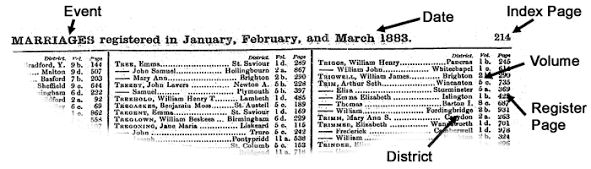
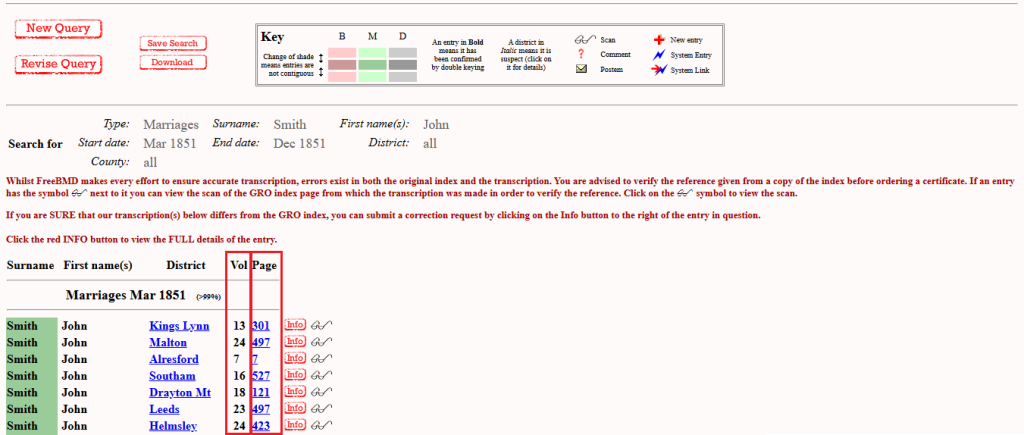
However, the official system of recording the vital life events of the population by the government—known as civil registration—began in England and Wales on July 1, 1837. From this date forward, all certificates of births, marriages, and deaths have been systematically kept by the General Register Office (GRO). Today, family historians can order these official certificates either directly from the GRO or from the relevant local register office to unlock the secrets of their ancestors’ final days, using the same volume and page reference system explained in my GRO Birth Index Decoding Guide.
2. Decoding the Critical Fields on a Death Certificate
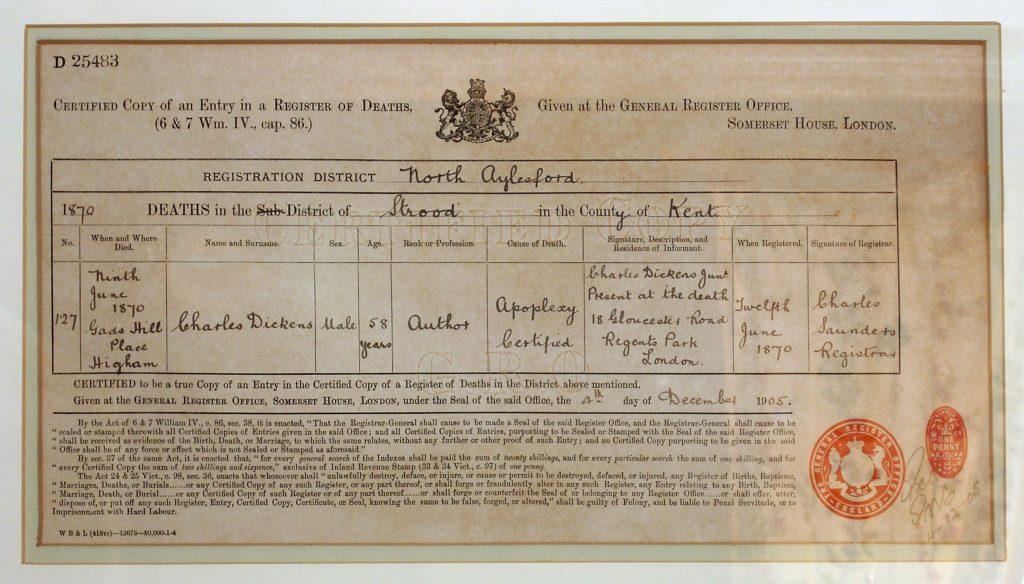
When you receive a civil death certificate from the GRO, it is packed with specific columns that paint a vivid picture of your ancestor’s life and death.
- Date and Place of Death: This field grounds your ancestor in a specific time and location. The place of death might be their private residence, or it could be an institution like a workhouse or hospital, which can immediately point you toward secondary historical records.
- Occupation: The deceased’s occupation provides profound insight into their daily life and socioeconomic status. For women in the 19th and early 20th centuries, this field might instead list their husband’s occupation or name (e.g., “Widow of John Smith, Blacksmith”), offering an essential cross-reference for your research.
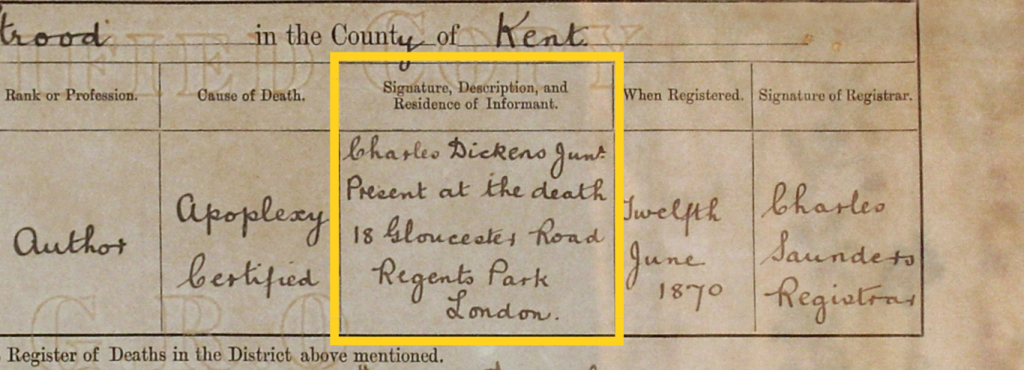
- Informant Details: The person reporting the death had to provide their name, signature (or mark), and their qualification to register the death (such as being present at the death). This brings us to one of the most genealogically valuable sections of the document.
3. The Hidden Value: The Informant’s Relationship and Address
Do not overlook the Informant’s Relationship and Address fields; they are often goldmines for family historians. The informant was frequently a close family member—a spouse, child, or sibling who took on the responsibility of reporting the passing.
The “Relationship to Deceased” field can confirm suspected family links or introduce entirely unknown relatives into your family tree. Furthermore, the informant’s address can act as a crucial stepping stone. If the informant lived at a different address than the deceased, you now have a brand-new geographical location to search in upcoming census records, street directories, or electoral registers. Tracking the informant can often help you break through stubborn brick walls in your research.
4. Translating the Past: Cause of Death
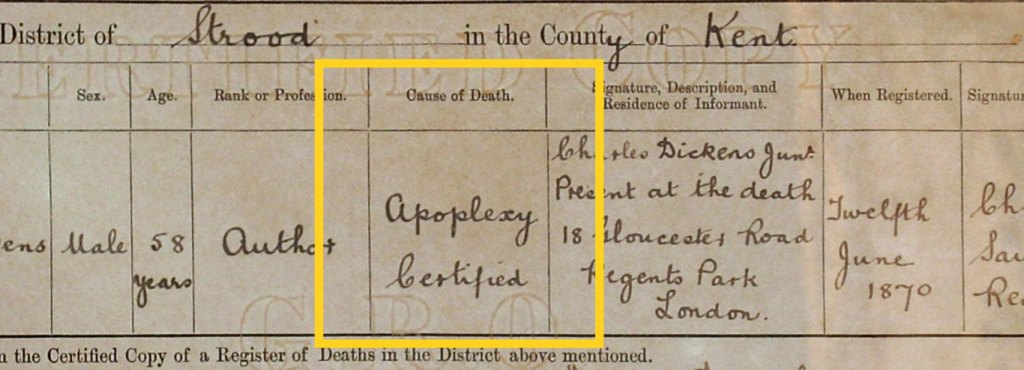
The ‘Cause of Death’ column is perhaps the most poignant field on a death certificate, revealing the harsh medical realities our ancestors faced. However, 19th and early 20th-century medical terminology can be incredibly bewildering to a modern researcher. Terms like “dropsy,” “consumption,” “ague,” or “bad blood” were commonplace but have long since been replaced by modern clinical diagnoses.
To truly understand what your ancestor experienced and the historical context of their passing, you need to be able to accurately translate these obsolete terms.
Troubleshooting Your Search: If you know your ancestor passed away after 1837 but you cannot find their entry in the volunteer indexes to order a certificate, don’t panic. Read my guide on Why Your Ancestor Is Missing from the FreeBMD Index to uncover the eight specific reasons they might be hidden and how to find them.
Take the Next Step in Your Research
Are you ready to uncover the full story behind your ancestor’s official death certificate?
Frequently Asked Questions
Where can I buy a copy of an official historic death certificate from 1837 onwards?
You won’t find individual death certificates available to view or download at The National Archives. Instead, you’ll need to order an official copy directly from the General Register Office (GRO) or from the specific local register office where your ancestor passed away.
What does it mean if my female ancestor’s occupation field lists a man’s name instead of a job?
This was a common practice in the 19th and early 20th centuries, where a woman’s entry might state something like “Widow of John Smith, Blacksmith”. It’s incredibly useful for your research, as it provides an official cross-reference to confirm her husband’s name and trade.
Why is the informant’s address on the certificate different from where my ancestor died?
This is actually a fantastic clue for your family tree, as the informant was very often a close relative. A different address gives you a brand-new geographical location to search in local street directories, electoral registers, or the next census.
I can’t make sense of the cause of death on a Victorian certificate—what do terms like “consumption” mean?
Medical terminology has changed drastically over the years, and older certificates rely heavily on obsolete clinical terms. For instance, “consumption” was the historical term for tuberculosis, while “dropsy” referred to swelling caused by fluid retention.

Scott Hammond is an archival detective and family history researcher who turns complex historical records into simple, easy-to-follow resources. Outside of solving centuries-old mysteries, he is a dedicated husband, father of five, and an avid British & World history buff.