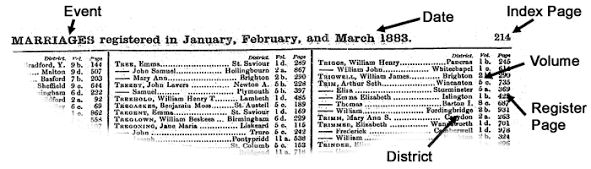
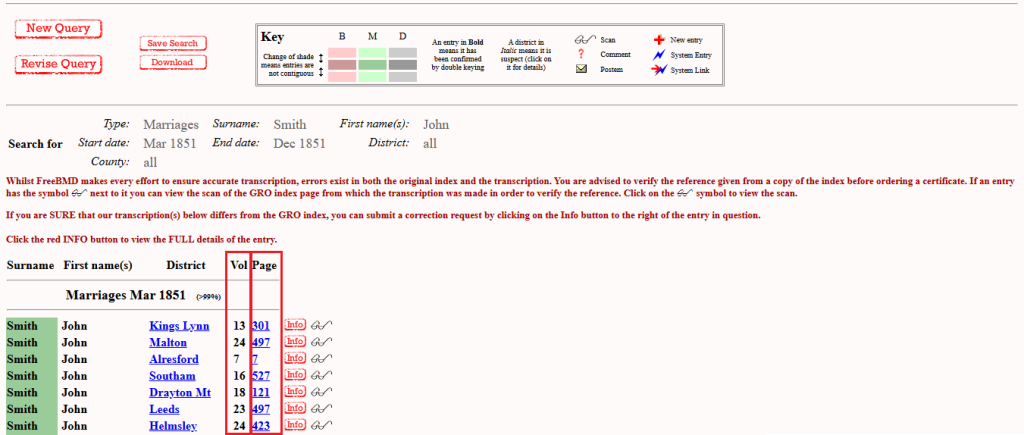
While my main Civil Registration Hub page covers the essential foundations of the General Register Office’s volume and page indexing system, this guide focuses strictly on mastering the specific, often tricky nuances of historical birth index entries. By understanding exactly how these specific records were structured and transcribed over time, you’ll be equipped to break down stubborn brick walls and uncover those elusive, hidden maternal lines.
Table of Contents
Format Variations: FreeBMD vs. The Official GRO Portal
When analysing a birth index entry, the single most valuable piece of data for extending your family tree is the mother’s maiden name. However, how this information is displayed depends entirely on which database you’re using.
If you’re searching on popular volunteer sites like FreeBMD, it’s vital to remember that you’re looking at a direct transcription of the historical printed index books. Because the government didn’t officially add the Mother’s Maiden Name column to those printed indexes until September 1911, any FreeBMD search for birth index entries prior to that date’ll simply not include the mother’s maiden name.
To bypass this historical blindspot, you must pivot to the official GRO online portal. The modern GRO system is an incredibly powerful research tool because it’s been reverse-indexed, meaning it’s retroactively supplied these missing maiden names to entries all the way back to the start of civil registration in 1837.
Decoding the Dash (-)
When utilising the retroactively updated GRO portal for pre-1911 births, you might occasionally encounter a dash (-) or a blank space in the Mother’s Maiden Name column. Rather than being a transcription error or a missing record, this symbol carries important genealogical weight: it usually indicates an illegitimate birth. In these instances, the dash signifies that there was no maiden name that was distinct from the child’s recorded surname.
Decoding Advanced Anomalies in Birth Index Entries
As you dive deeper into the official GRO online portal, you may occasionally encounter strange anomalies in the page numbers of birth index entries, most notably the addition of an ‘/S’ suffix (for example, Page “123/S”). When you see this, you’re looking at a supplemental entry.
Supplemental entries were created by the GRO to handle late registrations or subsequent corrections that were processed after the original index books’d already been printed in alphabetical order. Because these late entries didn’t fit into the original alphabetical printing sequence of the physical books, they were tacked on as supplements. FreeBMD, which faithfully transcribes the original printed books, often misses or struggles to display these late additions seamlessly.
When the GRO Portal and FreeBMD Disagree
It’s incredibly common to find elusive birth index entries on the official GRO portal that’s completely missing from FreeBMD. When you encounter this discrepancy, don’t second-guess your findings! The official GRO database is the ultimate authority, as it represents the most accurate and up-to-date direct reference for these historical records.
If you find a match on the GRO portal but not on FreeBMD, simply bypass the volunteer sites altogether. Take the exact Year, Quarter, District, Volume, and Page number directly from the GRO portal’s search results and use those exact coordinates to order your certificate.
Your Checklist for Bypassing Birth Transcription Errors
Finally, if your ancestor is still proving impossible to find, human error is likely to blame. Navigating 19th-century cursive requires patience and creativity. When a standard search fails, run through this practical checklist to outsmart common transcription errors:
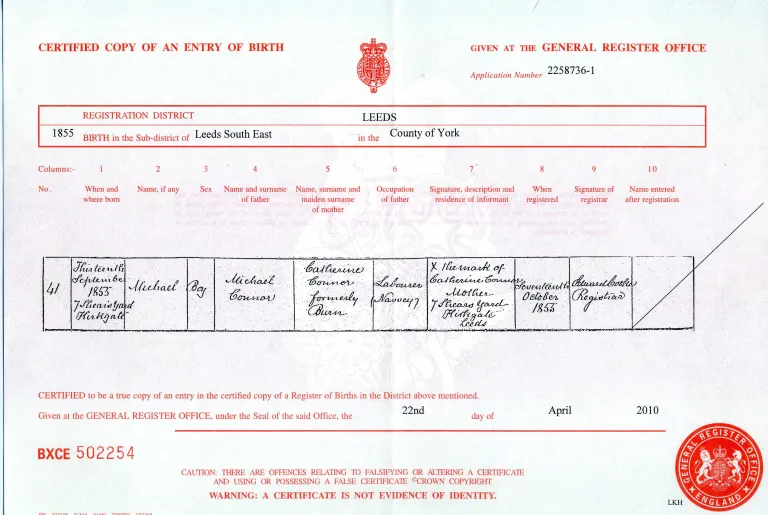
- Check for Phonetic Spellings: Standardised spelling is a relatively modern concept. Remember that your ancestor may’ve been illiterate, leaving the local registrar to spell the name exactly as it sounded. Always search for phonetic variations of the surname when looking up birth index entries.
- Swap Confusing Consonants: In Victorian penmanship, certain letters were frequently styled in ways that make them indistinguishable to modern transcribers. Try manually swapping letters that are commonly confused, such as substituting an “M” for an “N”, or swapping an “I” for a “J”, and a “U” for a “V”.
- Utilise Wildcards: If the handwriting was truly atrocious, the indexer might’ve guessed the spelling entirely wrong. Use wildcard characters (like an asterisk *) in your search fields to replace vowels or tricky middle letters, allowing the database to pull up a wider range of potential matches.
By anticipating these anomalies and transcription errors, you can confidently decode even the most stubborn birth index entries and continue building your family tree!
Return to the Hub: For a complete overview of the civil pillars, head back to my main GRO Birth Index Decoding Guide, where I break down the fundamental quarterly system and historical county volume ranges.
Frequently Asked Questions
Why can I see the mother’s maiden name on the GRO portal but not on FreeBMD for an 1870 birth?
FreeBMD is a direct transcription of the original printed index books, which didn’t officially include a Mother’s Maiden Name column until September 1911. The official GRO portal, however, has been reverse-indexed, meaning they’ve retroactively supplied those missing maiden names all the way back to 1837.
What does it mean if there’s just a dash in the Mother’s Maiden Name column on the GRO site?
Don’t worry, it isn’t a glitch or a missing piece of data in the index. A dash usually indicates an illegitimate birth, showing that there wasn’t a maiden name for the mother that differed from the child’s recorded surname.
I found an entry on the GRO portal ending in “/S”, but it isn’t on FreeBMD—which one is right?
Always trust the official GRO portal, as it’s the ultimate authority for these records. The “/S” suffix means it’s a supplemental entry created for a late registration or a later correction, which often means it was missed by the printed books that FreeBMD transcribes.
How can I find my ancestor’s birth entry if their surname was spelled phonetically?
Since standardised spelling wasn’t common in the 19th century, registrars often wrote names exactly as they sounded to the ear. If a standard search fails, try searching for phonetic variations of the surname or use wildcard characters like an asterisk to replace tricky vowels and middle letters.
Which letters are most commonly mixed up due to Victorian handwriting errors?
If your ancestor has seemingly vanished, it’s highly likely a transcriber misread the old cursive penmanship. Try manually swapping consonants that looked nearly identical in Victorian script, such as replacing an “M” with an “N”, an “I” with a “J”, or a “U” with a “V”.

Scott Hammond is an archival detective and family history researcher who turns complex historical records into simple, easy-to-follow resources. Outside of solving centuries-old mysteries, he is a dedicated husband, father of five, and an avid British & World history buff.