If you’re tracking Welsh ancestors before the start of civil registration in 1837, you must be prepared to use a fundamentally different approach compared to researching in English counties. Successfully navigating Welsh family history requires you to adapt to a unique blend of centralised archival access and incredibly distinct cultural hurdles—most notably, the historic Welsh patronymic naming systems.
By understanding how these records were kept and where they’re stored today, you can confidently trace your lineage through the surviving Welsh parish registers.
Table of Contents
A Fundamentally Different Research Landscape

When hunting for early Welsh vital records, your research’ll inevitably point you toward the coastal town of Aberystwyth. The National Library of Wales (NLW) serves as the ultimate, centralised sanctuary for Welsh genealogy, housing the vast majority of surviving Bishop’s Transcripts.
However, you must keep a critical archival distinction in mind: while the NLW holds these comprehensive diocesan-level collections, the original pre-1837 Welsh parish registers themselves are kept at local Welsh county archive offices rather than at the National Library. To build an unbroken tree, you’ll need to utilise both local registers and central transcripts in tandem.
A Lifeline: Utilizing Welsh Bishop’s Transcripts (BTs)
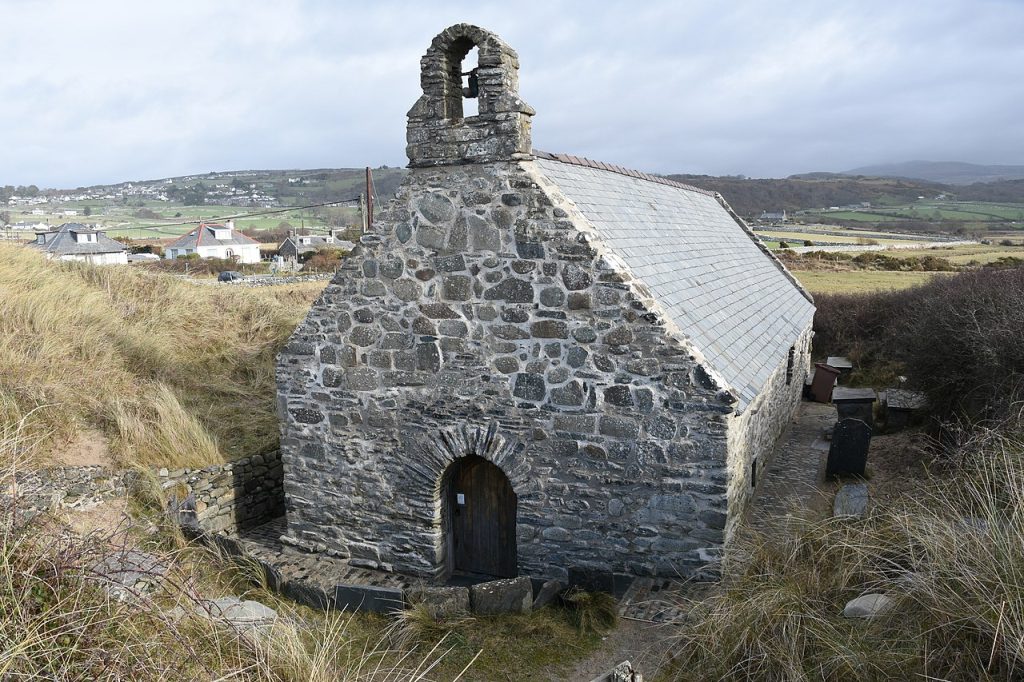
Because early vital records were historically stored in physical wooden or iron parish chests secured with multiple locks, they were highly susceptible to the elements. Rural churchwardens often struggled with damp church chests, leading to original page entries becoming heavily rotted, water-damaged, or completely lost over the centuries inside the primary Welsh parish registers.
Fortunately, researchers have an absolute lifeline: Bishop’s Transcripts (BTs). These records are official, annual contemporary copies of the parish records that the local clergy were required to write out and send to the diocesan bishop every year.
If the original volume for your ancestor’s village has missing or illegible pages, these annual diocesan copies can completely bypass the gaps in the Welsh parish registers. Held centrally at the National Library of Wales, they offer a continuous, reliable paper trail starting from the 1660s right up to the 1850s.
Understanding the Welsh Patronymic Naming System
As you dive into pre-1837 records, you’ll quickly encounter the most unique cultural challenge in British genealogy: the traditional ‘Patronymic Naming System’. Unlike standard English practices, Welsh children historically didn’t inherit a permanent, fixed family surname within historical Welsh parish registers. Instead, a child took their father’s first name as their own surname.
These names were typically linked by the Welsh prefixes ‘ap’ (used before a consonant) or ‘ab’ (used before a vowel), both meaning “son of”. For example, under this system, if a man named Evan Thomas had a son named John, the child wouldn’t be named John Thomas; rather, he’d be recorded as John Evan, or John ap Evan.
The Critical Research Warning
You must approach early records with a massive research warning: while this custom slowly vanished between the 16th and early 19th centuries, it lasted the longest in isolated rural areas. In western and rural Wales, the patronymic system was still widely used right up until the early 1800s, heavily dominating the handwritten Welsh parish registers.
For the family historian, this presents a startling reality: your family line’ll completely change surnames with every single generation you go back. If John ap Evan had a son named David, that child became David ab John. Searching for a consistent family surname across multiple centuries will simply not work!
Step-by-Step: Outsmarting Patronymics
Because the men’s surnames constantly shift, relying on standard search algorithms can lead you completely off track. To successfully outsmart the patronymic system inside the primary Welsh parish registers, you need to rely on alternative identifying markers. Follow this step-by-step strategy:
{/* Reason: Hierarchical logic dictates tracking stable maternal and geographic anchors before executing narrow parish searches; broad name searches fail immediately due to generational surname shifts. */} Because fathers’ names shift the surname, a mother’s Christian name is often your most stable anchor. If you’re looking for the children of William and Gwenllian, search specifically for that exact parental first-name pairing across a 10-to-15-year window, ignoring the children’s shifting surnames entirely. In rural Wales, geography’s often more reliable than a surname. Look closely at the exact farm name or small hamlet recorded in the baptismal or burial register. If multiple children with shifting surnames are all linked to the exact same isolated farm property in the Welsh parish registers, you’ve likely found your family unit. Don’t rely on broad, nationwide name searches. Instead, turn to digitised regional archives on partner sites—such as the dedicated ‘Wales Collection’ on Findmypast or indexes on FamilySearch. Use their advanced tools to restrict your search to a single specific parish, and systematically browse the original images year by year to spot your family’s geographic and naming patterns.
By understanding the rules of the patronymic system and adjusting your search strategy to track maternal lines and exact geographic farms, you can confidently decode these shifting surnames and successfully map your deep Welsh ancestry!
Connect Your Research Paths: Reconstructing Welsh lineages across the patronymic naming system requires utilising every available anchor. Revisit our main 1841–1921 Census Records Overview Hub to ground your shifting family surnames in stable, ten-year household snapshots.
Take the Next Step in Your Research
Ready to keep your ancestral records completely organised as you order official certificates and verify entries found within Welsh parish registers? Use our specialist log to stay on top of your family tree research.
Frequently Asked Questions
Where can I find original pre-1837 Welsh parish registers and are they kept at the National Library of Wales?
It’s a common misconception, but the National Library of Wales (NLW) doesn’t actually hold the original local parish registers. The original books are safely kept at local Welsh county archive offices, while the NLW houses the centralised, diocesan-level Bishop’s Transcripts.
How can Bishop’s Transcripts help me if an original Welsh register has rotted or been water-damaged?
Because original books were kept in damp iron church chests, many pages unfortunately became illegible over the centuries. Bishop’s Transcripts are your ultimate lifeline because they’re official, annual contemporary copies sent directly to the bishop, providing a perfectly clean backup paper trail from the 1660s to the 1850s.
What on earth is “patronymic naming” and why does my Welsh family surname keep changing?
Before the 1800s, many Welsh families didn’t use fixed surnames; instead, a child took their father’s first name as their surname, often linked by “ap” or “ab” (meaning “son of”). This means if Evan Thomas had a son named John, the boy became John ap Evan, changing the family surname completely with every single generation.
How can I successfully trace my family back if their surnames change every generation?
Relying on a standard surname search won’t work, so you can outsmart the patronymic system by following these simple steps:
1. Track maternal anchors: Search for children using the mother’s Christian name alongside the father’s, as her name remains a stable anchor while surnames shift.
2. Map the geography: Note the exact farm or hamlet name in the register, as multiple children linked to the same property are likely part of your family unit.
3. Bypass broad databases: Head to specialised regional archives, like the dedicated Wales Collection on Findmypast.
4. Browse parish by parish: Use their advanced tools to lock your search into one specific parish, and systematically flip through the original images year by year to spot your family’s patterns.

Scott Hammond is an archival detective and family history researcher who turns complex historical records into simple, easy-to-follow resources. Outside of solving centuries-old mysteries, he is a dedicated husband, father of five, and an avid British & World history buff.