

If you have been relying solely on free online indexes and are hesitant to spend money on official documents, you are likely missing the crucial evidence needed to break down your genealogical brick walls. Looking at real certificate case studies is the easiest way to see how official records solve these mysteries. Civil registration—the system of recording the vital life events of a population by its government—began in England and Wales on 1 July 1837. Since that exact date, birth, marriage, and death certificates have served as the primary civil evidence for family historians.
It is a common misconception that these vital records are held in a central library where you can simply browse the documents. In fact, birth, marriage, and death certificates cannot be viewed or ordered at The National Archives. To obtain these indispensable records, you must order them directly from the General Register Office (GRO) or from the relevant local register office where the event took place. While charges apply for these orders, the wealth of definitive information they contain is often the only logical proof available to solve deep family mysteries.
Table of Contents
Certificate Case Studies 1: How a Birth Record Unlocked a Generation
Imagine you are tracking an ancestor with a common name, such as Thomas Baker, born in 1852. The online indexes might give you a registration district and a quarter, but they cannot definitively confirm his parentage. This is where investing in the physical document pays off. By ordering the official birth certificate from the GRO, you unlock one of the most vital pieces of the genealogical puzzle: the mother’s maiden name.
In this scenario, Thomas Baker’s birth certificate arrives and reveals his mother was “Mary Baker, formerly Miller.” Armed with the maiden name “Miller,” the researcher can now confidently search the marriage indexes for a union between a Baker and a Miller prior to 1852. This single detail purchased from the GRO bypasses years of guesswork, instantly confirming the parents’ identities, preventing you from following the wrong family line, and unlocking an entirely new generation of your family tree.
Certificate Case Studies 2: Proving the Correct Family Line
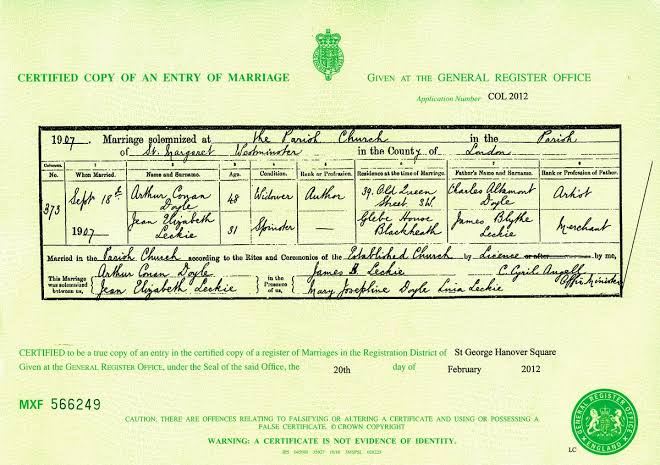
Marriage records are arguably the most valuable vital records a genealogist can possess when dealing with identity confusion. Consider the brick wall of Eleanor Hughes, who married in 1878. The census records present three different women named Eleanor Hughes in the same county, all born around the same time. How do you logically prove which one is your ancestor without wasting years researching the wrong family?
By ordering Eleanor’s official marriage certificate, the researcher gains access to a wealth of new data, most importantly the details of the bride and groom’s fathers. The certificate lists Eleanor’s father as “Richard Hughes,” and crucially, lists his occupation as a “Blacksmith.” Returning to the census records, the researcher can instantly eliminate the Eleanor whose father was a farm labourer and the Eleanor whose father was a tailor. The father’s name and occupation provided by the official marriage certificate serve as undeniable, documented proof of the correct family line.
Take Control of Your Research
As these certificate case studies show, investing in civil registration documents from the GRO or local register offices is not just an expense; it is a critical investment in the accuracy and integrity of your family history research.
Master the System: These case studies show the power of physical documents, but finding the references starts with the indexes. Check out my core GRO Birth Index Decoding Guide to learn exactly how to locate the volume and page numbers yourself.
Take the Next Step in Your Research
To help you overcome any hesitation and keep your research perfectly organized, I invite you to download my free “GRO Certificate Ordering Tracking Log.” This tool will help you manage your certificate purchases, record the specific brick walls you are trying to break, and log the vital clues you discover when your documents arrive. Download it today and start building your family tree on a foundation of proven, historical facts!
Frequently Asked Questions
Can I save time and money by viewing my ancestor’s actual birth certificate at The National Archives?
It’s a common misunderstanding, but you can’t actually view or order individual vital records there. To get your hands on these crucial documents, you’ll need to buy them directly from the General Register Office (GRO) or the local register office where the event took place.
How can buying a physical birth certificate help me find a mother’s maiden name for a pre-1911 birth?
While older online indexes often leave this out, ordering the official physical certificate from the GRO changes everything. It’ll reveal the mother’s maiden name clearly in the text (such as “formerly Miller”), giving you the exact surname you need to confidently track down the parents’ marriage.
I’m stuck between three people with the same name—how can a marriage certificate help me?
An official marriage certificate is the ultimate tool for clearing up identity confusion because it lists the names and occupations of both the bride’s and groom’s fathers. This brilliant bit of evidence lets you cross-reference with census records and instantly eliminate the wrong families.
Is it really worth paying for official GRO certificates when free online indexes exist?
Yes, it absolutely is, as indexes only tell you a fraction of the story and can’t prove a family link. Investing in the official civil certificates is often the only logical way to get definitive, documented proof, which stops you from wasting years researching the wrong family line.

Scott Hammond is an archival detective and family history researcher who turns complex historical records into simple, easy-to-follow resources. Outside of solving centuries-old mysteries, he is a dedicated husband, father of five, and an avid British & World history buff.